Tretinoin and Minoxidil: Why Are They Sometimes Used Together?
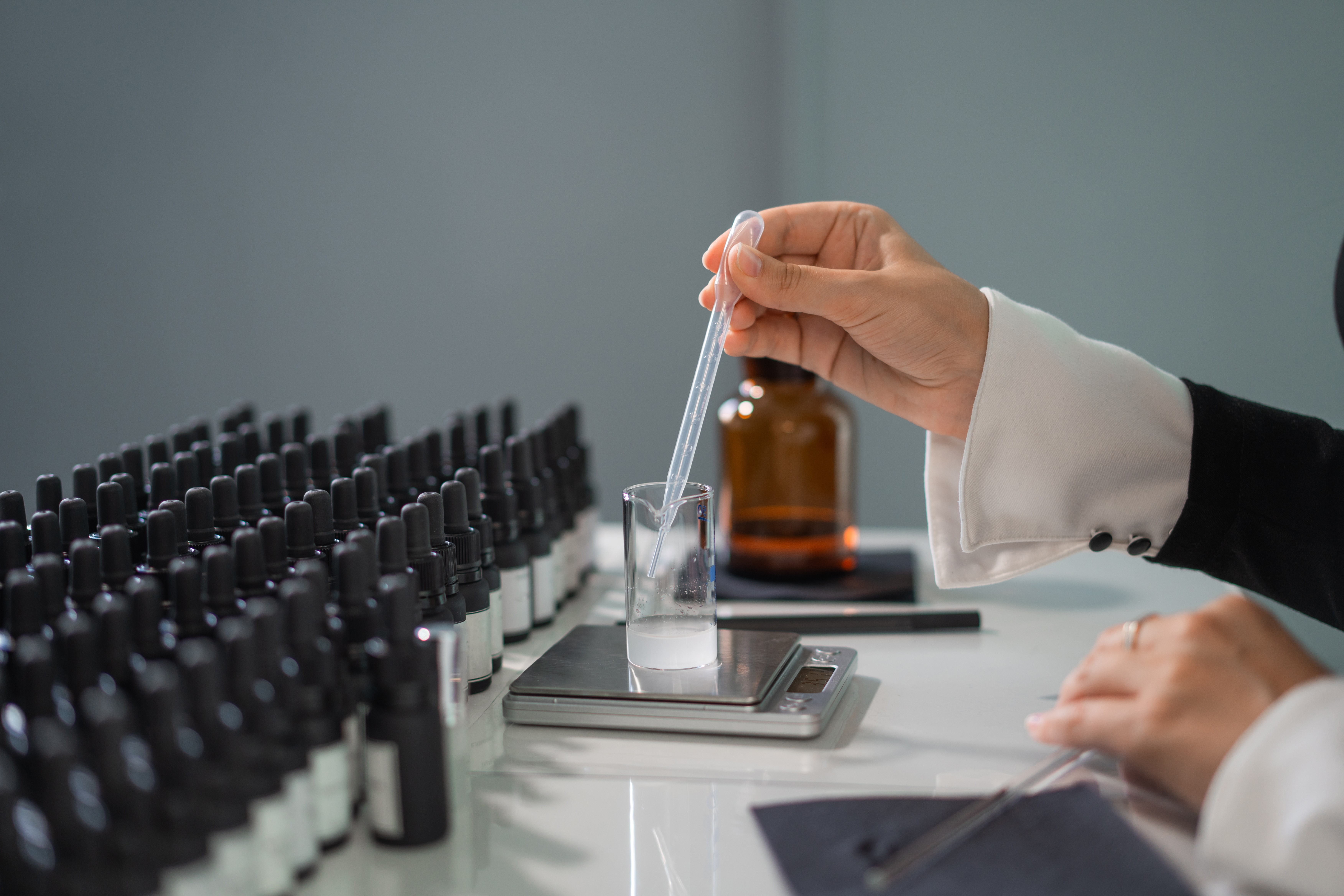
Medically reviewed by Dr Margo Gkini, Consultant Dermatologist, MD, MSc, PhD, FRCP – October 2026
Why Combine Tretinoin and Minoxidil?
Minoxidil is one of the most established evidence-based treatments for male and female pattern hair loss. Tretinoin is a prescription retinoid more commonly associated with treating skin conditions.
So why would you find them together in your personalised Hair + Me formulation?
Research suggests tretinoin may enhance the way topical minoxidil works, influencing how it’s absorbed and activated around the hair follicle.
There’s another potential benefit too: a simpler routine. In one clinical trial in men with androgenetic alopecia, combining 5% minoxidil with 0.01% tretinoin once daily produced comparable hair-growth outcomes to using 5% minoxidil twice daily.
For some people, combining tretinoin and minoxidil may help optimise treatment while making it simpler to use consistently.
First, How Does Minoxidil Work?
Minoxidil helps support hair follicles affected by pattern hair loss. It can prolong the growth (anagen) phase of the hair cycle, helping to improve hair diameter and density over time.
But applying minoxidil to the scalp is only the beginning.
Before it can work, minoxidil needs to be converted within the hair follicle into its active form, minoxidil sulfate. This happens with the help of enzymes called sulfotransferases.
And this is where tretinoin becomes particularly interesting.
For a more detailed explanation of minoxidil, read What Is Minoxidil? A Simple Explanation.
1. Tretinoin May Help Activate Minoxidil
Not everybody has the same level of sulfotransferase activity in their hair follicles. This may help explain why some people respond better to topical minoxidil than others.
A 2019 study found that topical tretinoin increased follicular sulfotransferase activity. After five days of tretinoin application, 43% of participants initially predicted to be non-responders to minoxidil were converted into predicted responders.
Importantly, this doesn't mean that 43% went on to experience visible hair regrowth. The study measured a biological marker associated with predicted response, rather than long-term hair growth results.
However, it does provide a compelling biological explanation for why tretinoin may help some people get more from topical minoxidil.
2. Tretinoin May Increase Minoxidil Penetration
Tretinoin can also affect the skin barrier, potentially increasing how much topical minoxidil penetrates through the skin.
A 2026 review highlighted both increased minoxidil penetration and increased activation through follicular sulfotransferase enzymes as possible ways tretinoin and minoxidil may work together.
But greater absorption isn't automatically better. It can potentially increase the risk of irritation.
That’s why tretinoin and minoxidil shouldn’t be independently mixed or layered at home. If the combination is suitable for you, it should form part of a treatment plan recommended by your prescriber.
3. The Combination May Allow Once-Daily Treatment
For some people, this may be the most practical benefit.
Traditional 5% topical minoxidil treatment for male pattern hair loss is commonly applied twice daily.
That means remembering to apply it every morning and every evening.
Researchers investigated whether adding tretinoin could make that routine simpler.
A randomised clinical trial compared 31 men with androgenetic alopecia using either:
5% minoxidil twice daily
5% minoxidil + 0.01% tretinoin once daily at night.
Both groups experienced improvements, and researchers found no statistically significant differences in the measured hair-growth outcomes between the groups.
The trial was small and conducted in men, so more research is needed. But the results suggest the combination could offer a simpler routine for people who would otherwise apply topical minoxidil twice a day.
Why Does Once-Daily Treatment Matter?
Because consistency matters when it comes to hair loss treatment.
Pattern hair loss is chronic and progressive, so treatment generally needs to continue long term to maintain its benefits.
But twice-daily application can be difficult to fit around:
Showering
Hair styling
Exercise
Work
Travel
Busy mornings
Reducing treatment from two applications to one may sound like a small change, but that’s potentially 365 fewer applications over a year.
A simpler routine may make it easier to stick to – and consistency gives your treatment the best chance to deliver results.
Is Tretinoin + Minoxidil More Effective Than Minoxidil Alone?
This is where it's important to be precise.
Current research doesn't show that adding tretinoin makes minoxidil universally more effective.
The randomised trial found comparable results between once-daily combination treatment and twice-daily minoxidil – not superior results from the combination.
However, for some people, tretinoin may influence minoxidil activation and absorption while also allowing for a more convenient treatment schedule.
A 2026 review found encouraging evidence that the combination has a plausible mechanism and encouraging evidence, while also highlighting that clinical research remains limited.
So the goal isn't simply more treatment. For the right person, it’s about finding an effective treatment that is practical and simple to use daily.
Does Everyone Using Minoxidil Need Tretinoin?
No.
Many people respond well to minoxidil alone, so there’s no reason to add another prescription ingredient unless a medical professional deems it necessary.
Your prescriber may consider factors including:
Current treatment and minoxidil concentration
How often you apply it
Your response so far
Scalp sensitivity
Your medical history
How easily you can maintain your current routine
What About Side Effects?
Tretinoin can sometimes cause:
Dryness
Redness
Flaking
Itching
Stinging or scalp irritation
In the small randomised trial comparing once-daily minoxidil + tretinoin with twice-daily minoxidil, local irritation was similar between the two groups.
However, everyone’s tolerance is different.
If you experience irritation, speak to your prescriber rather than simply stopping treatment. They can review your formulation and advise you on what to do next.
How Hair + Me Can Help
Hair loss isn't one-size-fits-all – and neither is treatment. At Hair + Me, every treatment journey begins with a thorough online consultation that's reviewed by a qualified UK-licensed Pharmacist Prescriber. They'll assess your hair loss pattern, medical history, lifestyle and treatment goals to determine whether treatment is appropriate and, if so, create a personalised treatment plan tailored to your individual needs.
Using clinically proven, prescription-strength ingredients, your treatment is designed to address the underlying cause of your hair loss, helping to reduce shedding, support regrowth and improve hair density over time. As your hair changes, your treatment can too. Regular reconsultations allow your prescriber to review your progress and, where appropriate, reformulate your prescription to help you achieve the best possible results.
For appropriate patients currently using topical minoxidil twice daily, a prescriber may consider whether a personalised once-daily formulation containing minoxidil and tretinoin could be suitable – helping make long-term treatment simpler and easier to fit into everyday life.
Final Thoughts
Tretinoin and minoxidil aren't combined because two prescription ingredients must automatically be better than one.
They're sometimes used together because tretinoin may enhance the way topical minoxidil works.
Research suggests tretinoin may increase minoxidil penetration and influence the follicular enzymes responsible for converting minoxidil into its active form. A small randomised trial found that once-daily 5% minoxidil + 0.01% tretinoin produced comparable hair-growth outcomes to twice-daily 5% minoxidil in men with androgenetic alopecia.
For the right patient, that creates a compelling practical benefit: an established hair loss treatment that may be possible to use once a day instead of twice.
The evidence base for the combination is limited for minoxidil itself, and tretinoin won't be appropriate for everyone. But for some people, it gives prescribers another way to personalise treatment – balancing effectiveness, tolerability and the practical reality of using hair loss treatment long term.
Continue Reading
Scientific References
Helpful Resources
Hair Regrowth Starts Here
Thicker, fuller hair begins with a scientifically proven treatment, personalised for your hair by our experts.
Treatment subject to dermatological assessment.