What Is Dutasteride? A Simple Explanation
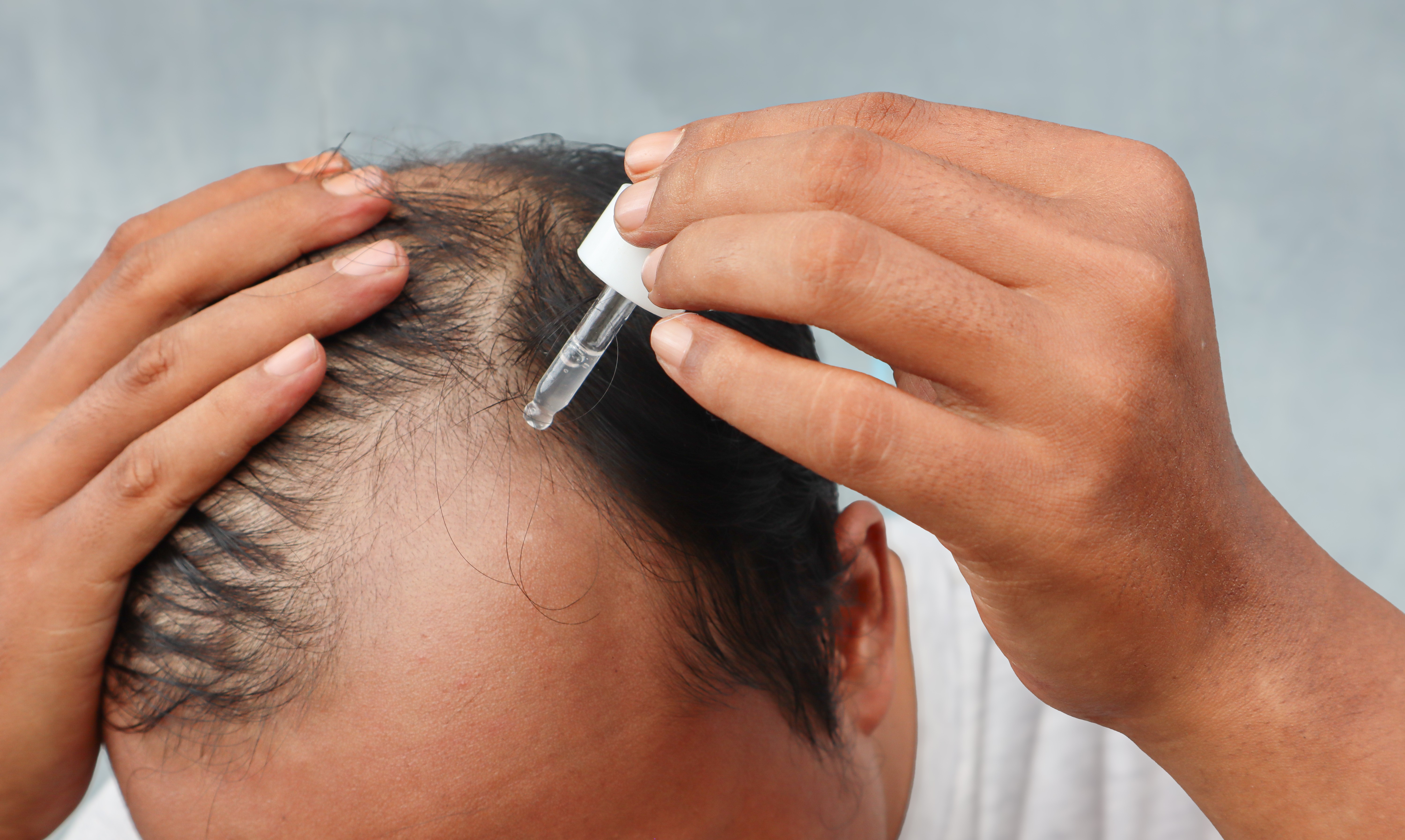
Medically reviewed by Dr Margo Gkini, Consultant Dermatologist, MD, MSc, PhD, FRCP - March 2026
Dutasteride is a prescription medication used to treat male pattern hair loss (androgenetic alopecia) by targeting the hormone responsible for follicle miniaturisation.
Like finasteride, dutasteride reduces levels of DHT (dihydrotestosterone) – the hormone that shrinks hair follicles in genetically susceptible individuals. However, dutasteride blocks DHT at 2 sites, rather than just one, like Finasteride
It is typically considered when:
Hair loss is more advanced
Finasteride response has been limited
A stronger DHT-blocking effect is clinically appropriate
Dutasteride is a powerful medication and is prescribed under medical supervision.
How Does Dutasteride Work?
To understand dutasteride, it helps to revisit the role of DHT.
The Role of DHT in Hair Loss
In male pattern hair loss:
Testosterone is converted into DHT
DHT binds to androgen receptors in hair follicles
Follicles gradually shrink (miniaturise)
Hair becomes thinner, shorter and weaker
Over time, affected follicles may stop producing hair.
What Dutasteride Does Differently
Dutasteride blocks both type I and type II 5-alpha reductase enzymes – the enzymes responsible for converting testosterone into DHT.
Finasteride blocks primarily type II.
This means dutasteride reduces scalp DHT levels more than finasteride.
The result:
Stronger inhibition of DHT
Slower follicle miniaturisation
Greater potential of stabilising pattern hair loss
Dutasteride vs Finasteride: What’s the Difference?
Both medications reduce DHT – but they differ in strength and scope.
Feature | Finasteride | Dutasteride |
Enzyme blockade | Type II | Type I & II |
DHT reduction | Moderate | Greater |
Typical use | First-line | Second-line / specialist use |
Dutasteride may be considered when:
Hair loss continues despite finasteride use
Crown thinning is significant
A stronger intervention is clinically justified
Who Is Dutasteride Suitable For?
Dutasteride is typically prescribed for:
Men with moderate to advanced male pattern hair loss
Individuals who have not responded sufficiently to finasteride
Cases requiring stronger DHT suppression
It is not commonly prescribed to women of childbearing potential and can be used off-label in postmenopausal women.
As with finasteride, suitability depends on full medical review.
When Will I See Results?
Like other hair loss treatments, dutasteride requires patience.
Typical timeline:
Months 1–3: Hair loss stabilisation
Months 3–6: Reduced shedding
Months 6–12: Visible improvement in density for some individuals
12 months+: A more complete response assessment
The primary goal is to halt progression. Regrowth may occur, particularly in the crown.
What Are the Possible Side Effects?
Because dutasteride reduces DHT more than finasteride, its side effect profile overlaps with – and may slightly exceed – that of finasteride.
Possible side effects include:
Reduced libido
Erectile dysfunction
Decreased ejaculation volume
Mood changes
These effects are uncommon and often reversible if the medication is stopped.
Long-term data suggests many men tolerate dutasteride well under supervision.
How Are Side Effects Managed?
If side effects occur, options may include:
Dose adjustment
Switching back to finasteride
Reducing frequency
Reassessment of suitability
Open discussion with your prescriber is essential. Monitoring ensures safety.
What Happens If I Stop Dutasteride?
Like finasteride, dutasteride only works while it is being taken.
If discontinued:
DHT levels gradually return to baseline
Miniaturisation may resume
Preserved hair may slowly be lost
Pattern hair loss is chronic, so ongoing treatment is usually required to maintain results.
Can Dutasteride Be Combined With Other Treatments?
Yes.
Dutasteride:
Reduces DHT
Minoxidil:
Stimulates growth
Together, they address two different mechanisms of hair loss. Combination therapy is often more effective than single-agent treatment.
Who Should Avoid Dutasteride?
Dutasteride is NOT suitable for:
Women who are pregnant or may become pregnant – it is teratogenic
Individuals with certain hormone-sensitive conditions
Those with specific contraindications identified during consultation
Medical supervision ensures appropriate prescribing.
Final Thoughts
Dutasteride is:
A potent DHT-blocking medication
Used for male pattern hair loss
Often considered when finasteride response is insufficient
Effective at slowing progression of pattern hair loss
Suitable for long-term use under supervision
It is not a cosmetic solution – it is a medical intervention targeting the hormonal driver of pattern hair loss.
Understanding its mechanism helps you decide whether it’s the right escalation step in your treatment plan.
References
Ong MM, Avram M, McMichael A, Tosti A, Lipner SR. Antiandrogen therapy for the treatment of female pattern hair loss: A clinical review of current and emerging therapies. J Am Acad Dermatol. 2025 Sep;93(3):749-760.
Ding Y, Wang C, Bi L, Du Y, Lu C, Zhao M, Fan W. Dutasteride for the Treatment of Androgenetic Alopecia: An Updated Review. Dermatology. 2024;240(5-6):833-843.
Sereepanpanich V, Khunkhet S, Rojhirunsakool S, Udompataikul M. Efficacy and safety of twice- or thrice-weekly dutasteride versus daily finasteride in men with androgenetic alopecia: A randomized, investigator-blinded, active-controlled, parallel-group pilot study. JAAD Int. 2025 Sep 15;23:69-76
Hair Regrowth Starts Here
Thicker, fuller hair begins with a scientifically proven treatment, personalised for your hair by our experts.
Treatment subject to dermatological assessment.