What Is Female Pattern Hair Loss? A Simple Explanation
Medically reviewed by Dr Margo Gkini, Consultant Dermatologist, MD, MSc, PhD, FRCP - March 2026
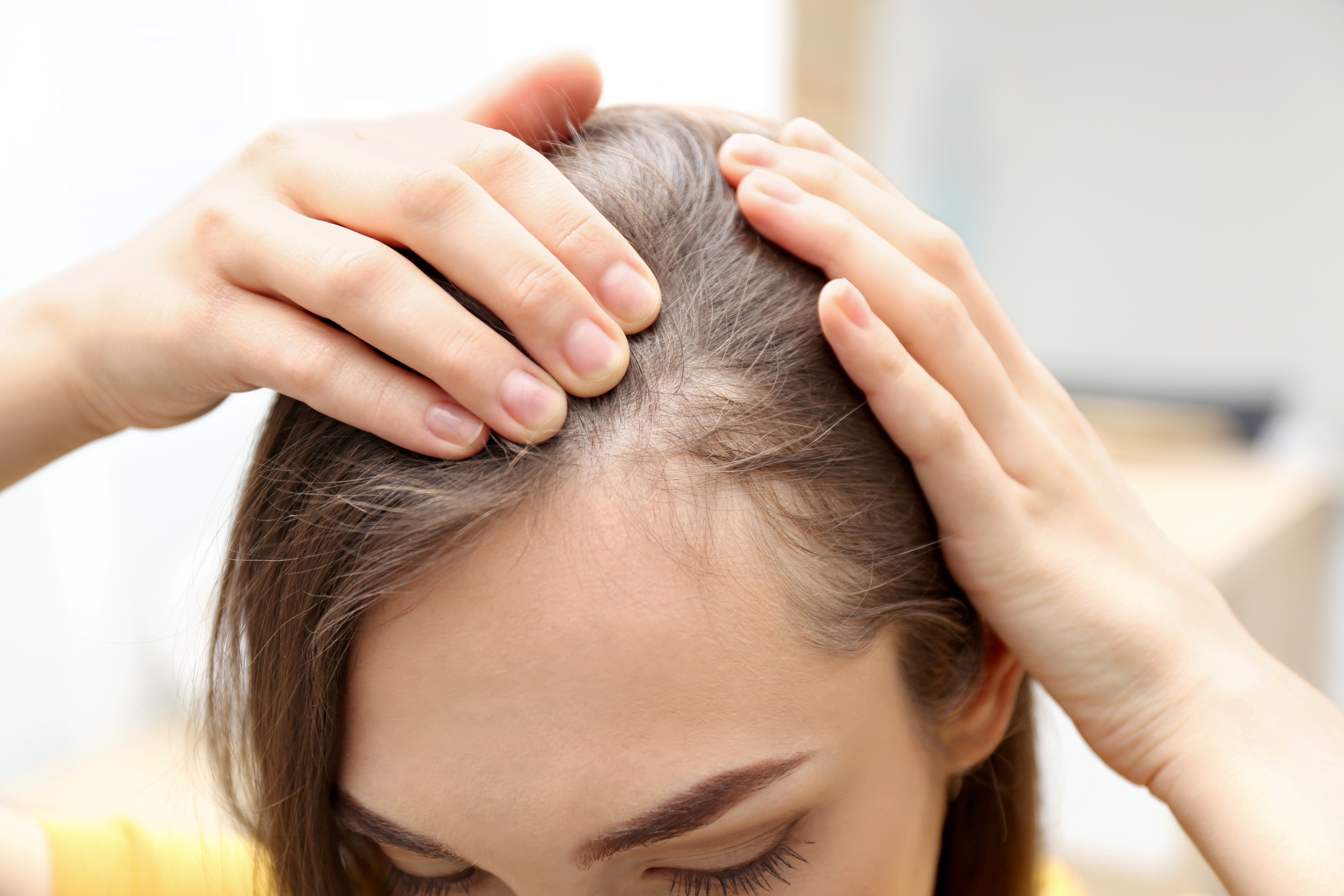
Female pattern hair loss (FPHL) – also called androgenetic alopecia – is the most common cause of hair thinning in women. Unlike male pattern hair loss, which often starts with a receding hairline or bald spot, FPHL usually shows up as diffuse thinning across the top of the scalp.
Around 40% of women experience noticeable hair thinning by age 50 and more after menopause. It’s a genetic condition where hair follicles gradually shrink, producing finer hairs over time.
What Actually Causes Female Pattern Hair Loss?
FPHL is caused by a mix of genetics, hormones and age. Here’s what’s happening inside the follicles:
1. Hair follicles slowly shrink
FPHL is caused by a combination of genetic and hormonal factors. The hairs produced by the affected follicles become progressively smaller in diameter, shorter in length and lighter in colour until eventually the follicles shrink completely and stop producing hair.
FPHL may occur alongside conditions that involve elevated androgen levels (a group of hormones), such as polycystic ovarian syndrome (PCOS). Common signs of PCOS include acne, increased facial hair, irregular periods and infertility. Hormonal imbalances and fluctuations play a central role in both conditions.
2. Growth phase shortens
The hair’s growth (anagen) phase becomes shorter, while the resting (telogen) phase becomes longer – so more hairs fall out than grow in.
3. Hair density decreases over time
This is why the scalp becomes more visible even if you’re not “balding” in the traditional sense.
What Does Female Pattern Hair Loss Look Like?
FPHL has a very distinct pattern:
1. Thinning on the frontal area of the scalp
Hair becomes thinner along the parting line, which gradually widens over time.
2. “Christmas tree” pattern
Many women develop a triangular pattern of thinning at the front of the scalp – with parting being wider at the frontal part of the scalp
3. Reduced hair density
Rather than bald spots, women usually see overall thinning and reduced hair density, especially at the crown.
4. Rarely a receding hairline
Most women maintain their hairline, despite the significant thinning.
Early Signs to Look Out For
Female pattern hair loss is often subtle. Early signs include:
A widening part
More scalp showing in bright light
Ponytail feeling smaller or thinner
More hair left on brushes or in the shower
Shorter, finer hairs around the parting
A flatter or limp appearance due to reduced density
Spotting FPHL early is important – because earlier treatment gives better results.
Who Gets Female Pattern Hair Loss?
Female pattern hair loss can affect women at different stages of life, but it becomes more common with age – particularly after 40 and during or after menopause.
You may be more likely to develop FPHL if:
You have a family history of hair thinning (on either your mother’s or father’s side)
You experienced postpartum shedding that never fully recovered
You are going through perimenopause or menopause
You have PCOS or other hormone-related conditions
You notice gradual thinning rather than sudden shedding
While genetics play the biggest role, hormonal fluctuations can influence when thinning becomes noticeable. This is why some women first see changes after pregnancy, when starting or stopping contraception, or during menopause.
Importantly, FPHL is not caused by stress, poor hair care, or something you’ve done wrong — it reflects how certain follicles respond to hormonal and genetic signals over time.
Does Hormonal Imbalance Cause Female Pattern Hair Loss?
FPHL isn’t caused by “excess testosterone,” but hormones do influence it.
The key factor is follicle sensitivity, not hormone levels. Even normal levels of androgens can trigger thinning in women who are genetically predisposed.
Hair loss may worsen during:
Perimenopause or menopause
Starting or stopping hormonal birth control
Conditions like PCOS (due to higher androgen activity)
Female Pattern Hair Loss vs. Other Causes of Thinning
Not all hair loss in women is FPHL. Other conditions may cause diffuse shedding, including:
Telogen effluvium (stress-related shedding)
Iron deficiency
Thyroid problems
Postpartum changes
Autoimmune conditions like alopecia areata
FPHL tends to be chronic and gradual, while other types can be sudden or temporary.
A clinician will assess your pattern, medical history and growth cycles to diagnose the cause.
Is Female Pattern Hair Loss Permanent?
Without treatment, FPHL usually progresses slowly over time.
But the good news: treatments can slow or halt its progress. – especially when started early.
How is Female Pattern Hair Loss Diagnosed?
In a clinical setting, a clinician will usually examine your scalp and perform trichoscopy to assess hair changes. In combination with a detailed clinical history, diagnosis is easily made and biopsy is not required.
Female pattern hair loss can also be diagnosed safely and accurately through teledermatology. At Hair + Me, your online consultation is reviewed by a qualified Pharmacist Prescriber trained in hair and scalp conditions. You’ll be asked to provide clear photographs of your scalp from specific angles, alongside details about your medical history, symptoms, medications, menstrual history and any recent hormonal changes. Because FPHL has a recognisable pattern — typically diffuse thinning over the crown and widening of the part — it can usually be identified without the need for an in-person visit or biopsy. If anything in your history suggests a different cause, such as thyroid imbalance or iron deficiency, you may be advised to seek further tests before treatment is prescribed. This ensures your diagnosis — and any treatment plan — is both personalised and medically appropriate.
Treatment Options for Female Pattern Hair Loss
Here are common evidence-backed treatments used for FPHL:
1. Minoxidil
The most widely recommended option for women. Helps stimulate thicker, stronger regrowth.
2. Low-level laser therapy (LLLT)
May support growth and improve density when used consistently.
3. Antiandrogens – or Hormonal treatment
Certain hormone-modulating medications, such as spironolactone, may be considered in specific cases – especially if PCOS or high androgen activity is suspected.
4. Hair transplant surgery
An option for select cases, though less common in women due to diffuse thinning.
5. Aesthetic treatments
A supplementary treatment with some scientific support. Microneedling, platelet-rich plasma injections (PRP) and hair camouflage (e.g. concealer, hair pieces, hair fibers, toupés and wigs).
When Should You Seek Help?
It’s worth speaking to a dermatologist or pharmacist if you:
Notice a widening part
See more scalp in photos or bright light
Experience persistent shedding for 3+ months
Have a family history of thinning
Feel worried, distressed or self-conscious
Want to prevent further progression early
Early action = better long-term results.
Final Thoughts
Female pattern hair loss is:
Common
Gradual
Genetic and hormonal
Manageable
While it can be upsetting to notice thinning, understanding what’s happening – and acting early – can help protect your hair for the long term.
References
1. Famenini S, Slaught C, Duan L, Goh C. Demographics of women with female pattern hair loss and the effectiveness of spironolactone therapy. J Am Acad Dermatol. 2015 Oct;73(4):705-6.
2. Hair loss female pattern female pattern PIL. Available at: https://www.bad.org.uk/pils/hair-loss-female-pattern-androgenetic-alopecia
3. Bertoli MJ, Sadoughifar R, Schwartz RA, Lotti TM, Janniger CK. Female pattern hair loss: A comprehensive review. Dermatol Ther. 2020 Nov;33(6):e14055.
4. Kanti V, Messenger A, Dobos G, Reygagne P, Finner A, Blumeyer A, Trakatelli M, Tosti A, Del Marmol V, Piraccini BM, Nast A, Blume-Peytavi U. Evidence-based (S3) guideline for the treatment of androgenetic alopecia in women and in men - short version. J Eur Acad Dermatol Venereol. 2018 Jan;32(1):11-22.
Hair Regrowth Starts Here
Thicker, fuller hair begins with a scientifically proven treatment, personalised for your hair by our experts.
Treatment subject to dermatological assessment.